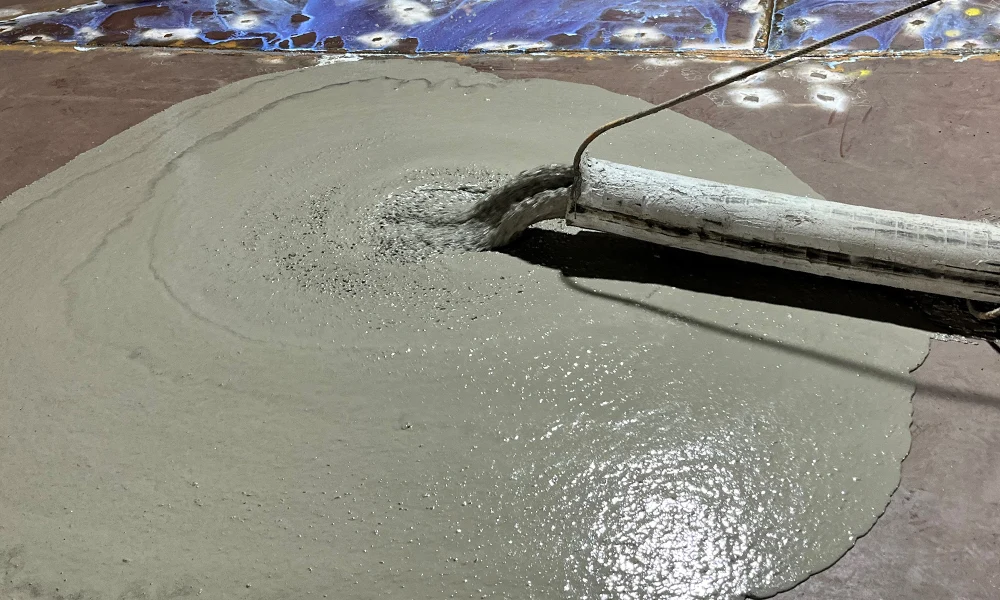
Self-compacting concrete (SCC) can be defined as fresh concrete that flows under its own weight and does not require external vibration to undergo compaction. It is used in the construction where it is hard to use vibrators for consolidation of concrete. Filling and passing ability, segregation resistance are the properties of self-compacting concrete. SCC possess superior flow ability in its fresh state that performs self-compaction and material consolidation without segregation issues. The materials, tests and properties of self-compacting concrete are explained in the below sections.
Advantages of Self Compacting Concrete
The main advantages of self-compacting concrete are:
- The permeability of the concrete structure is decreased
- SCC enables freedom in designing concrete structures
- The SCC construction is faster
- The problems associated with vibration is eliminated
- The concrete is placed with ease, which results in large cost saving
- The quality of the construction is increase
- The durability and reliability of the concrete structure is high compared to normal concrete structures
- Noise from vibration is reduced. This also reduce the hand arm vibration syndrome issues
Disadvantages of Self Compacting Concrete
SCC construction face the following limitations:
- There is no globally accepted test standard to undergo SCC mix design
- The cost of construction is costlier than the conventional concrete construction
- The use of designed mix will require more trial batches and lab tests
- The measurement and monitoring must be more precise.
- The material selection for SCC is more stringent
Applications of Self Compacting Concrete
The major applications of self-compacting concrete are:
- Construction of structures with complicated reinforcement
- SCC is used for repairs, restoration and renewal construction
- Highly stable and durable retaining walls are constructed with the help of SCC
- SCC is employed in the construction of raft and pile foundations